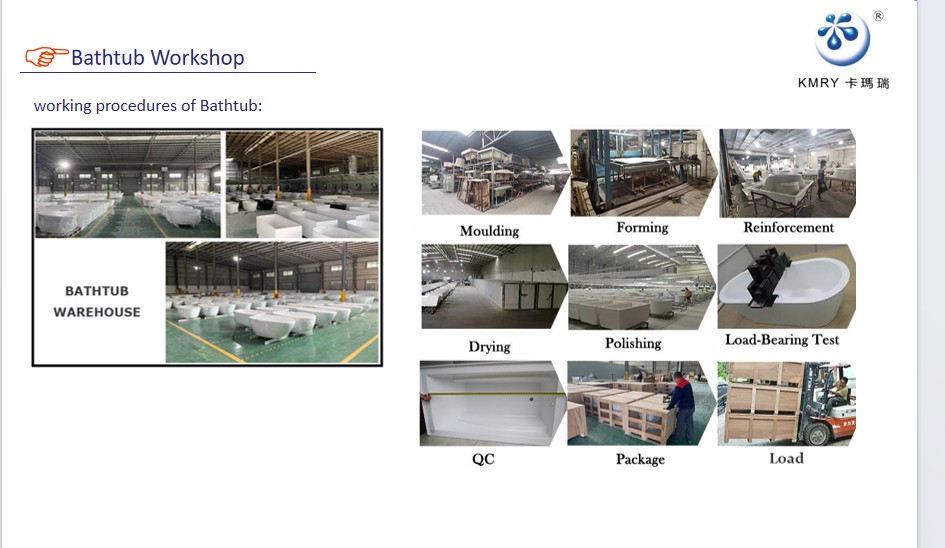
Mold Preparation: For acrylic bathtubs, molds are created based on the CAD designs. These molds are usually made from high-quality acrylic.
Forming Process:Liquid acrylic resin is poured into the mold and spread evenly. Fiberglass reinforcement is added during this stage to provide additional strength.
The drying process typically takes 24 to 48 hours, during which the surface hardens and becomes durable.Temperature and humidity play significant roles. Warmer temperatures and lower humidity levels facilitate faster drying.Do not use the bathtub or expose it to water during the drying period.
Apply a small amount of polishing compound to a clean, dry cloth.
Rub the dull area using circular motions and strong pressure.
For deeper scratches, start with coarse sandpaper (grit 600), then switch to finer sandpaper (grit 1200) before polishing.
Static load testing involves applying a fixed weight to the bathtub for an extended period to evaluate its ability to withstand long-term stress without deformation or failure.Conducting load-bearing tests on bathtubs is a systematic process that requires careful consideration of the bathtub's material, design, installation, and environmental conditions.
Quality control (QC) is a critical aspect of bathtub manufacturing, ensuring that each product meets high standards of safety, durability, and functionality.
6. Package And Loading
Packaging: The shower surround is packaged securely to protect it during transportation.
Loading: The finished product is shipped to customers or distributors.